
 Cost calculation
A person spends about 90% of their life indoors — at home, in a coffee shop, at work, at school or university. Scientists and doctors increasingly emphasize the importance of a healthy indoor microclimate, since indoor air quality literally shapes our health from birth to old age.
The human body is capable of reacting to poor indoor air quality. Sometimes, while inside a building, a person may feel fatigue and headaches, but as soon as they leave the place and step into fresh air, all the symptoms suddenly disappear. This may be a consequence of a “sick” building.
What is “Sick Building Syndrome”?
“Sick Building Syndrome” (SBS) is a term used to describe a person’s poor well-being without a clearly defined illness, associated with being in a room with an unfavorable microclimate. In such a case, a person’s well-being usually improves as soon as they leave the building. 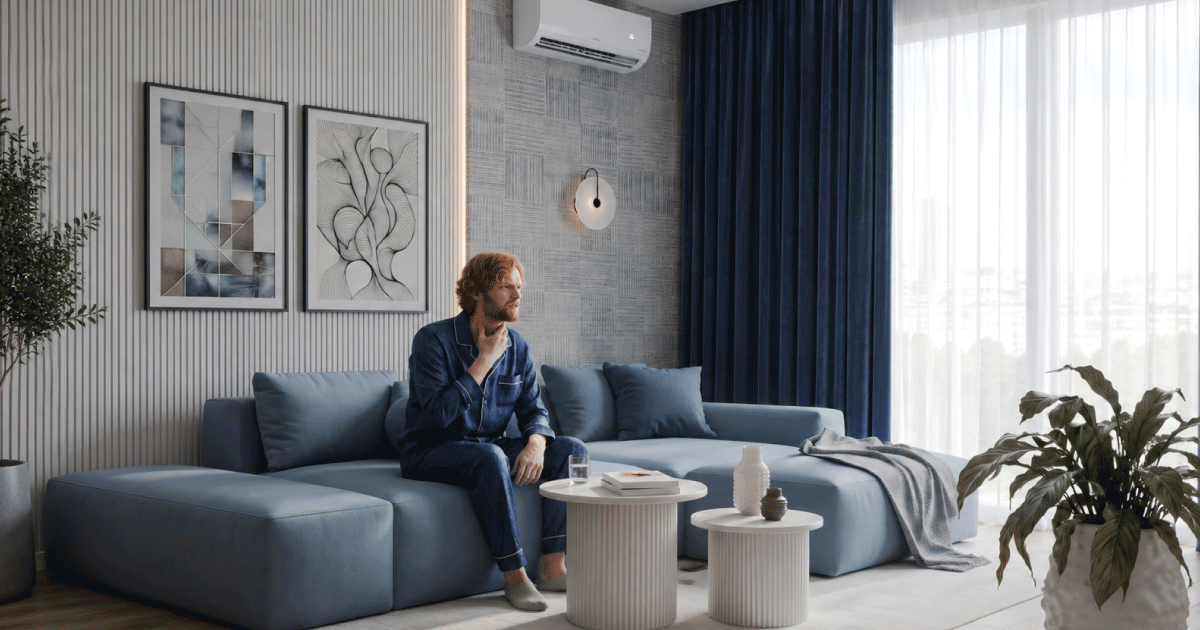 There are 2 groups of health disorders caused by the influence of the indoor living environment: Building Related Illness (BRI) – a term used when symptoms of a diagnosed illness are identified that can be directly linked to toxins or pollutants transmitted through indoor air (VOCs). *The term Volatile Organic Compounds was discussed in a previous article. The second group is called “Sick Building Syndrome” (SBS). These are acute health disorders and discomfort that occur in a specific room and almost completely disappear upon leaving that room. A 1984 World Health Organization committee report noted that up to 30% of new and renovated buildings worldwide may be subject to an excessive number of complaints related to indoor air quality (IAQ). This condition is often temporary, but some buildings have long-term problems. With the active development of the construction industry worldwide, this percentage is only growing. These problems arise from non-compliance with the original design or established operating rules, excessive thermal modernization of the building, and poor-quality ventilation systems.
Symptoms of “Sick Building Syndrome”
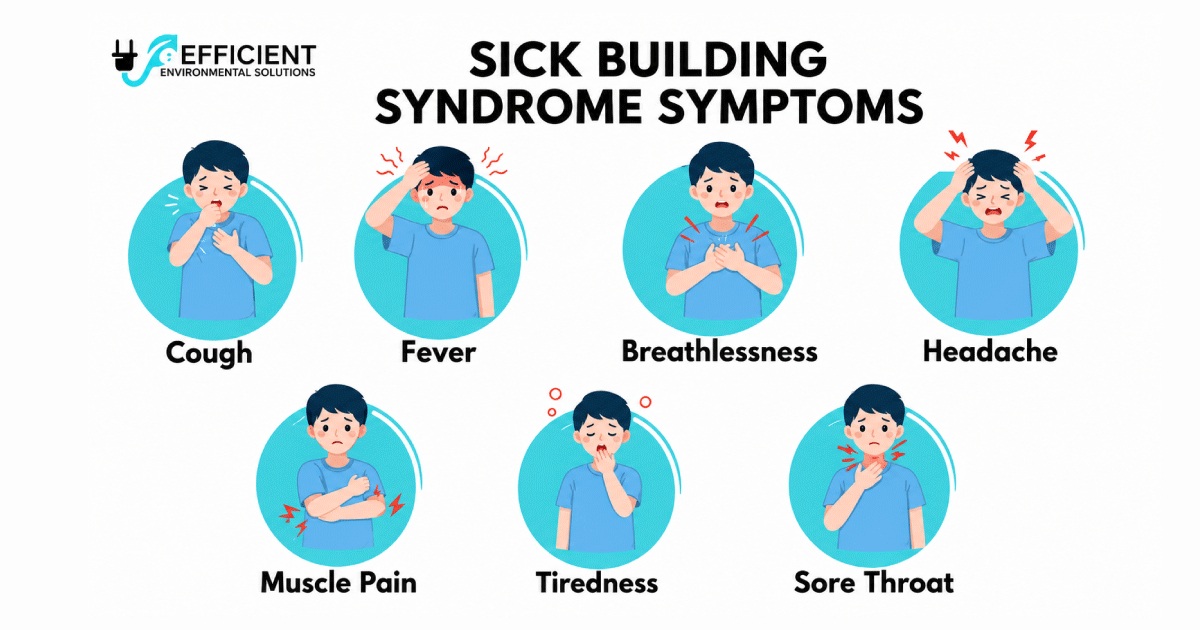
Possible symptoms that may occur due to SBS include:
- headache and dizziness;
- nausea;
- aches and pains in the body;
- fatigue;
- a feeling of “stale” air;
- a feeling of shortness of breath, tightness in the chest;
- poor concentration;
- dryness of mucous membranes and skin;
- sore throat.
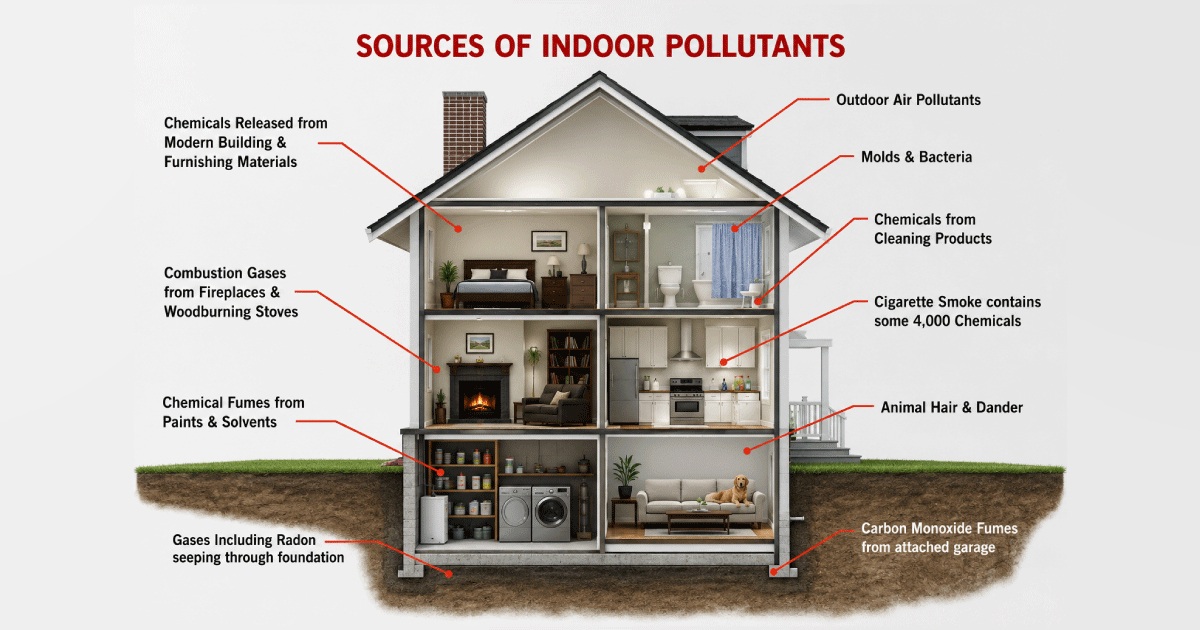
SBS can be caused by:
- buildings with poor ventilation;
- high levels of dust;
- tobacco smoke;
- poorly lit rooms;
- the presence of mold or fungus;
- chemicals in the air from cleaning products;
- heat or low humidity.
How to identify “Sick Building Syndrome”?
The symptoms you experience at home or at work may simply be seasonal allergies or a cold that just needs time to pass. To find out for sure whether your ailments are a result of SBS, a building inspection should be conducted. A building inspection includes:
- surveying residents or building employees about the symptoms they experience in certain rooms of the building;
- checking the heating, ventilation, and air conditioning (HVAC) system for contaminants in the air ducts;
- conducting a visual inspection of the building to look for sources of contamination, such as rodent droppings, standing water, or the appearance of mold/fungus;
- collecting air samples to determine the concentration of pollutants.
Ways to solve the Sick Building Syndrome problem
Solving the Sick Building Syndrome problem usually involves a combination of the following measures:
- controlling and optimizing pollution sources is one of the most effective methods of improving indoor air quality (IAQ), provided these sources are identified and can be regulated. Key practical measures include: scheduled maintenance of ventilation and air conditioning systems (in particular, regular cleaning and filter replacement); disposal of building elements damaged by moisture (mold/fungus); banning or limiting tobacco smoking; direct venting of process emissions outside the building. In addition, chemically active substances (paints, solvents, adhesives, and pesticides) should be stored and used exclusively in areas with intensive air exchange. It is also necessary to allow a technological pause after renovation or construction for complete outgassing of materials before the facility is put into use.
- if the sources cannot be completely eliminated, the second most important step is increasing ventilation intensity. HVAC systems usually perform significantly worse than their design specifications due to lack of servicing, so bringing them back up to state regulations (for example, DBN V.2.5-67:2013 “Heating, Ventilation and Air Conditioning”) is mandatory.
One of the best solutions to the problem of insufficient or inefficient building ventilation is installing decentralized PRANA heat recovery units. They help quickly achieve the appropriate room ventilation standards where using a centralized ventilation system is difficult or impossible.
- air purification is a useful complement to source control and ventilation, but it has certain limitations worth considering. Budget mechanical filters only trap large dust particles, while high-efficiency systems capable of capturing the smallest hazardous particles are expensive to maintain. In addition, mechanical filtration is powerless against toxic gases and odors — removing them requires special adsorption (carbon) units, which require regular and costly sorbent replacement. Ultimately, air purifiers are an effective tool, but due to their high cost and narrow specialization, they have limited application and cannot fully replace proper air exchange.
Sources
- Sick Building Syndrome Is Recognized;
- Sick Building Syndrome;
- SICK BUILDING SYNDROME – Do we treat the building or its people first?
Conclusion “Sick Building Syndrome” is a real and underestimated problem that affects the health and well-being of millions of people every day. Most of us spend the vast majority of our lives indoors, without even suspecting that the air around us could be a source of chronic fatigue, headaches, or reduced concentration. A comprehensive approach (source control, regular maintenance of ventilation systems, and air purification) can significantly improve a building’s microclimate. However, a constant inflow of fresh air from outside remains the key condition for a healthy indoor environment. This is where decentralized PRANA systems become the optimal solution: they effectively provide standard-compliant air exchange without complex duct installation, retaining heat and maintaining fresh air around the clock. Taking care of the air quality in your home or office means taking care of the quality of your own life.