
 +38 044 383-03-46
 Cost calculation
Energy Efficiency of Buildings in Ukraine: Is This Topic Relevant Today and How Will the Construction Market Develop in 2026-2030?
As of 2026, the issue of building energy efficiency in Ukraine has ceased to be merely a technical or “ecological” trend – it has become an economic necessity and a competitive advantage for developers, contractors, and designers. Rising energy costs, energy independence requirements, post-war reconstruction, and integration into European standards are shaping a new reality in which buildings are assessed not only by location or architecture, but also by how much energy they consume and how efficiently they use it.
For businesses, this means a direct impact on operational costs and investment attractiveness of properties; for the state – a tool for reducing energy dependence; and for users – comfort and quality of living environment. This is why energy certification of buildings is gradually becoming a core element of the real estate market rather than a mere formality.
In Ukraine, energy certification of buildings is governed by the Law of Ukraine “On Energy Efficiency of Buildings”. This is not a marketing move or a voluntary “green” badge, but an official instrument for assessing how much energy a building consumes, what energy efficiency class it belongs to, and what measures can improve its performance.
An Energy Certificate is an electronic document of an established form that specifies the energy performance indicators and energy efficiency class of a building, along with recommendations for improvement. Certification is essentially a form of energy audit: during the inspection, energy use, characteristics of building envelope structures, engineering systems, and compliance with minimum requirements are analysed.
Certification is not mandatory for all buildings. It is required for: new construction, reconstruction and major renovation of buildings of consequence class CC2 and CC3, buildings undergoing thermal modernisation with state support, as well as state and municipal buildings with a heated floor area exceeding 250 m², particularly those frequently visited by the public. The source can be accessed here.

To determine a building’s energy efficiency class, a comprehensive approach is used that accounts for all major sources of energy consumption and heat losses. Specifically, pursuant to Order No. 169 of the Ministry of Regional Development, Construction and Housing and Communal Services of Ukraine dated 11.07.2018 On Approval of the Methodology for Determining the Energy Efficiency of Buildings, the energy efficiency level of a building is determined according to the data in the table below, based on the indicator ΔEP, %, which is the percentage difference between the overall specific energy consumption for heating and cooling EPuse, kWh/m⁻², [kWh/m⁻³] and the limit value of specific energy consumption for heating and cooling, EPp, kWh/m⁻², [kWh/m⁻³], calculated using the formula:
ΔEP = [(EPuse − EPp) / EPp] × 100,
| where: | EPuse | – | the overall specific energy consumption indicator for heating and cooling; |
| EPp | – | the limit value of specific energy consumption for heating and cooling of residential and public buildings, established in accordance with minimum energy efficiency requirements for buildings, taking into account the provisions of Part Two of Article 6 of the Law of Ukraine “On Energy Efficiency of Buildings”. |
Building Energy Efficiency Class
| Building Energy Efficiency Class | Percentage Indicators, ΔEP | Energy Efficiency Characteristics |
|---|---|---|
| A | ΔEP < -50 | Exceptionally high (highest level, buildings with very low energy consumption). |
| B | -50 ≤ ΔEP < -20 | Very high (significantly exceeds current building standards). |
| C | -20 ≤ ΔEP ≤ 0 | High / Sufficient (meets established state requirements for new buildings). |
| D | 0 < ΔEP ≤ 20 | Satisfactory (requires minor improvement). |
| E | 20 < ΔEP ≤ 35 | Low (building requires thermal modernisation). |
| F | 35 < ΔEP ≤ 50 | Very low (low comfort level and high heating costs). |
| G | 50 < ΔEP | Unsatisfactory (critically low energy efficiency, urgent insulation required). |
All formulas for precise calculations are available in the Order published on the official website of the Verkhovna Rada of Ukraine at this link.
In plain terms: the energy efficiency class shows how much energy a building consumes for its operation – heating, cooling, ventilation, hot water supply, and lighting. The lower the consumption, the higher the class and the more economical the building.
The energy efficiency level of a building directly affects how much the client (apartment or building owner) will pay for utilities and how comfortably they will live in that building.
In addition, the following factors are taken into account when calculating energy efficiency:
- thermal protection characteristics of building envelope structures (heat transfer coefficients of walls, roof, and windows);
- airtightness of the building and air infiltration rate;
- efficiency of engineering systems (boilers, heat pumps, cooling systems);
- presence and share of renewable energy sources;
- CO₂ emission levels;
- actual or calculated energy losses.
The source can be viewed here.
Ventilation is a full component of a building’s energy consumption calculation, as a significant portion of heat losses occur through air exchange. In standard buildings without controlled ventilation, heat losses through air can account for up to 30–50% of total losses.
During certification, the following are taken into account:
- type of ventilation (natural / mechanical);
- air exchange volumes (air change rate, m³/h);
- energy consumption of fans;
- availability of heat recovery systems.
Ventilation systems with heat recovery have a significant impact on the energy efficiency class, as they allow:
- recovery of heat from exhaust air (up to 70–98% depending on technology);
- reduction of the load on the heating system;
- lowering the overall annual energy consumption of the building;
- improvement of the EP indicator, which directly affects the building’s energy efficiency class (A–G).
In practice, it is very difficult to achieve high classes (A or B) in modern energy-efficient buildings without heat recovery, especially in Ukraine’s climatic conditions.
It is also important to note that ventilation affects not only energy performance, but also compliance with modern indoor environment quality standards:
- CO₂ control;
- prevention of excessive humidity;
- prevention of mould.
Therefore, ventilation with heat recovery is not simply an add-on feature, but one of the key factors that simultaneously influences both the energy efficiency of a building and the quality of life within it.
An energy certificate is issued not directly by a government authority, but by a certified building energy auditor. Such a specialist must have their qualifications confirmed through accredited qualification centres and be registered in the relevant database. The certificate itself is generated through the Unified State Electronic System in the Field of Construction, after which it receives a registration number.
Valid energy certificates can be checked in the open USESC register. Access is free of charge, meaning anyone can verify whether a specific building holds an official energy certificate.
The certificate specifies the building’s address, energy efficiency class, functional purpose, structural characteristics, floor area, engineering system characteristics, energy consumption indicators, greenhouse gas emission levels, recommendations for improving energy efficiency, and the energy auditor’s details.
The validity period of an energy certificate is 10 years. The source can be found at this link.
It is also worth distinguishing state energy certification from international “green” standards – LEED, BREEAM, DGNB, or WELL. State certification in Ukraine focuses specifically on the energy characteristics of a building, whereas LEED, BREEAM, or DGNB assess a broader set of criteria: materials, water, waste management, environmental impact, comfort, transport accessibility, sustainability, and the building’s life cycle.
Source at this link.
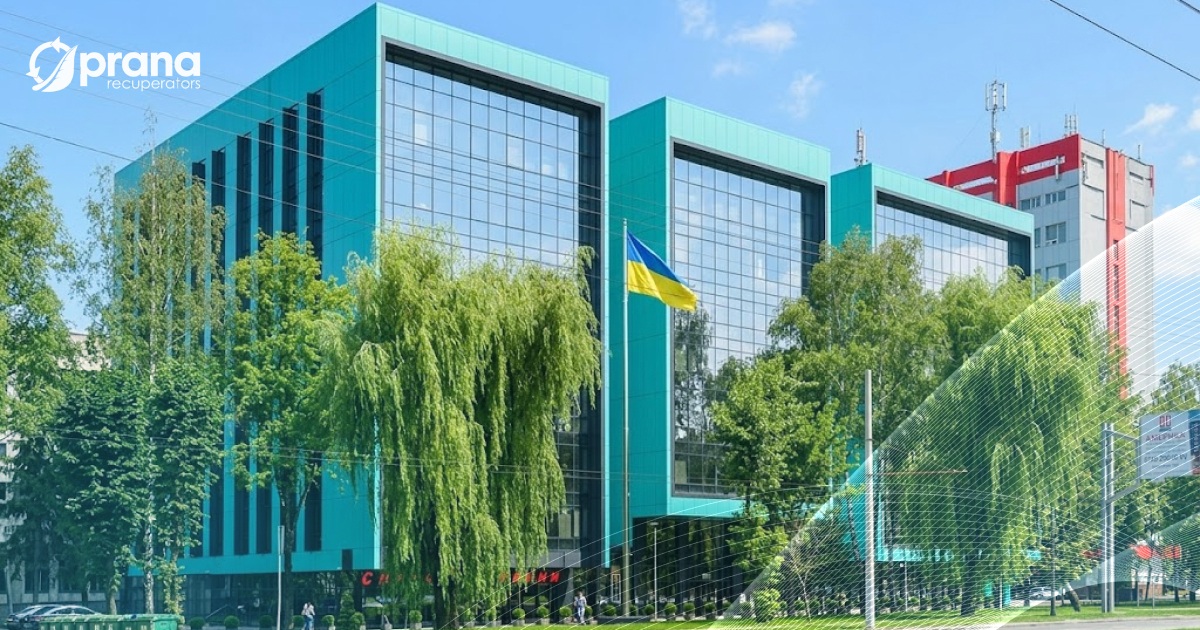
Ukraine already has buildings that have undergone international “green” certification. According to Colliers, buildings certified under BREEAM include Astarta Organic Business Center, Eurasia, Grand, Horizon Park, and Prime in Kyiv, as well as the Optima Plaza business park in Lviv. LEED certification has been obtained by buildings within the UNIT.City and Lviv Innovation Park projects, as well as BC Mag.nett and K/MOST.
Source at this link.
In 2025, Ukraine also introduced its first national green building standard for public buildings – SEM UA.1O156.41.032:2025. It was developed drawing on the approaches of BREEAM, LEED, and DGNB, but adapted to Ukrainian conditions, including provisions for shelters in the context of military threats.
Source at this link.
Importantly, state policy in Ukraine in the field of energy efficiency is actively developing and being strengthened. In particular, pursuant to Cabinet of Ministers of Ukraine Order No. 1104-r dated 08.10.2025, a plan of measures to improve the energy efficiency of government authority buildings has been approved for 2026.
This document provides for:
- mandatory entry and updating of building data in the national energy performance database;
- energy efficiency monitoring at the state level;
- implementation of energy management systems in government authorities;
- mandatory certification of public sector buildings;
- training of personnel in the principles of efficient energy use.
In effect, this means that Ukraine is transitioning from formal certification to systematic management of building energy efficiency.
Furthermore, legislative development is moving towards the implementation of Nearly Zero-Energy Buildings (NZEB), which are already in effect in Ukraine. Such buildings must meet enhanced requirements for thermal characteristics, airtightness, engineering systems, and the share of renewable energy.
What Does This Mean for Developers, Designers, and Architects in 2026–2030?
In the coming years, Ukraine’s real estate market will change quite rapidly under the influence of legislation, energy costs, and European integration requirements. For contractors, developers, and designers, this means a shift from “building square metres” to creating an efficient product with predictable operating costs.
First, energy efficiency will become the baseline standard, not a competitive advantage. Buildings with a low energy efficiency class will gradually lose their appeal to buyers, tenants, and investors, as high heating and maintenance costs become a critical decision-making factor.
Second, the demand for data transparency will increase. The availability of an energy certificate, energy consumption indicators, and a clear operational cost structure will become the standard of client communication, especially in the commercial real estate segment.
Third, the very logic of design is gradually changing. Whereas engineering systems were previously often added at the final stage, they must now be incorporated as early as the concept phase. This applies to thermal insulation, heating systems, and – above all – ventilation.
It is also worth noting that ventilation is moving from the category of “technical necessity” to “property value”. For residential real estate, this directly affects comfort and health; for office properties – productivity and compliance with the requirements of international companies. In many cases, the presence of modern ventilation with heat recovery is the decisive factor that enables the achievement of a high energy efficiency class and compliance with modern indoor environment quality standards.
As a result, developers who are already integrating energy-efficient and ventilation solutions at early stages gain not only regulatory compliance, but also a stronger market position, higher asset liquidity, and a long-term competitive advantage.
In summary, energy certification of buildings in Ukraine is establishing a baseline quality standard for properties and is gradually becoming a mandatory element of the market. At the same time, the modern approach to design already goes beyond energy efficiency alone: a building must not only consume fewer resources, but also create a comfortable and healthy environment for its occupants.
This is precisely where ventilation begins to play a key role. Even an energy-efficient building can remain uncomfortable if CO₂ accumulates, humidity rises, mould appears, or air quality control is absent. Air quality directly affects wellbeing, concentration, productivity, and the overall comfort of building users.
Therefore, in modern design, ventilation should be regarded not as an auxiliary engineering system, but as one of the key elements of a building’s value. Integrating effective ventilation solutions as early as the concept stage makes it possible to simultaneously achieve energy efficiency, standards compliance, and a healthy indoor environment – precisely the balance towards which the real estate markets of Ukraine and Europe are moving today.
List of Sources:
- Law of Ukraine “On Energy Efficiency of Buildings“;
- Order No. 169 of the Ministry of Regional Development, Construction and Housing and Communal Services of Ukraine dated 11.07.2018 On Approval of the Methodology for Determining the Energy Efficiency of Buildings;
- State Agency on Energy Efficiency and Energy Saving: certification of building energy efficiency;
- Energy certificate register in the USESC;
- National database of energy and operational characteristics of buildings;
- Association of Energy Auditors of Ukraine;
- Overview of green certifications in Ukraine: Baker McKenzie;
- Review of Ukrainian “green” buildings LEED/BREEAM/DGNB.