
 Cost calculation
Recent research by scientists at the University of Southampton (UK) has revealed the deleterious effects of copper and copper alloy surfaces on the viability of human coronavirus (HuCoV-229). This virus is responsible for acute respiratory symptoms (SARS, MERS).
Scientists placed samples of the virus on surfaces made of different materials: copper, stainless steel, ceramics, telephone, glass, and silicone. The experiment showed that copper had a strong inactivating effect that killed the virus within minutes. While on other surfaces, the pathogen remains viable for up to 5 days. The release of copper ions is actively involved in the inactivation of the HuCoV-229 virus (it destroys the virus genome and the viral envelope).
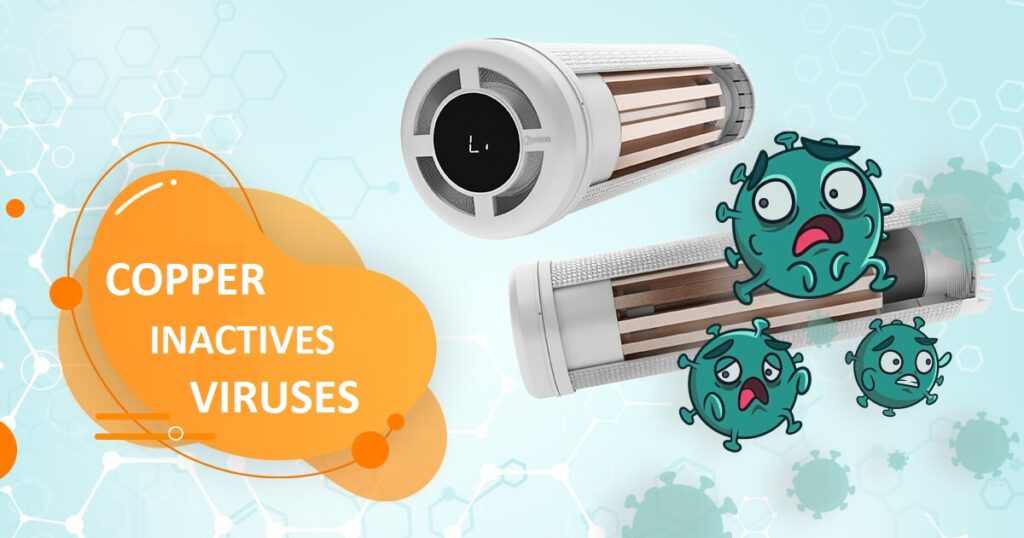
Such «antimicrobial» properties of copper open up optimistic prospects for the creation of so-called biocidal surfaces. Surfaces on which pathogens lose their viability. Such biocidal surfaces are designed to withstand epidemics by reducing the likelihood of virus spreading through the touch. They are planned for use in public places (schools, offices, administrative buildings, public transport).
While biocidal copper surfaces are still in the development stage, recuperators with copper heat exchanger have been working successfully for more than 15 years in 40 countries of the world, providing comfort, energy saving and safety of people’s breathing. The air flows through the copper heat exchanger, where pathogens lose their vitality. This is an additional safety factor of PRANA ventilation systems against bacteria, mold spores and viruses in the air.