
 +38 044 383-03-46
 Cost calculation
Residents of large cities cannot imagine an apartment, house or office without a high-quality ventilation system today. And it is not surprising because it has long been proven that fresh air is a necessary condition for comfortable well-being and good health of any person.Residents of large cities cannot imagine an apartment, house or office without a high-quality ventilation system today. And it is not surprising because it has long been proven that fresh air is a necessary condition for comfortable well-being and good health of any person.
The term «ventilation» comes from the Latin ventilatio — ventilation/airing. This is the removal of air from the room with the remains of excessive heat, moisture, harmful substances and replacing it with fresh, outdoor air.
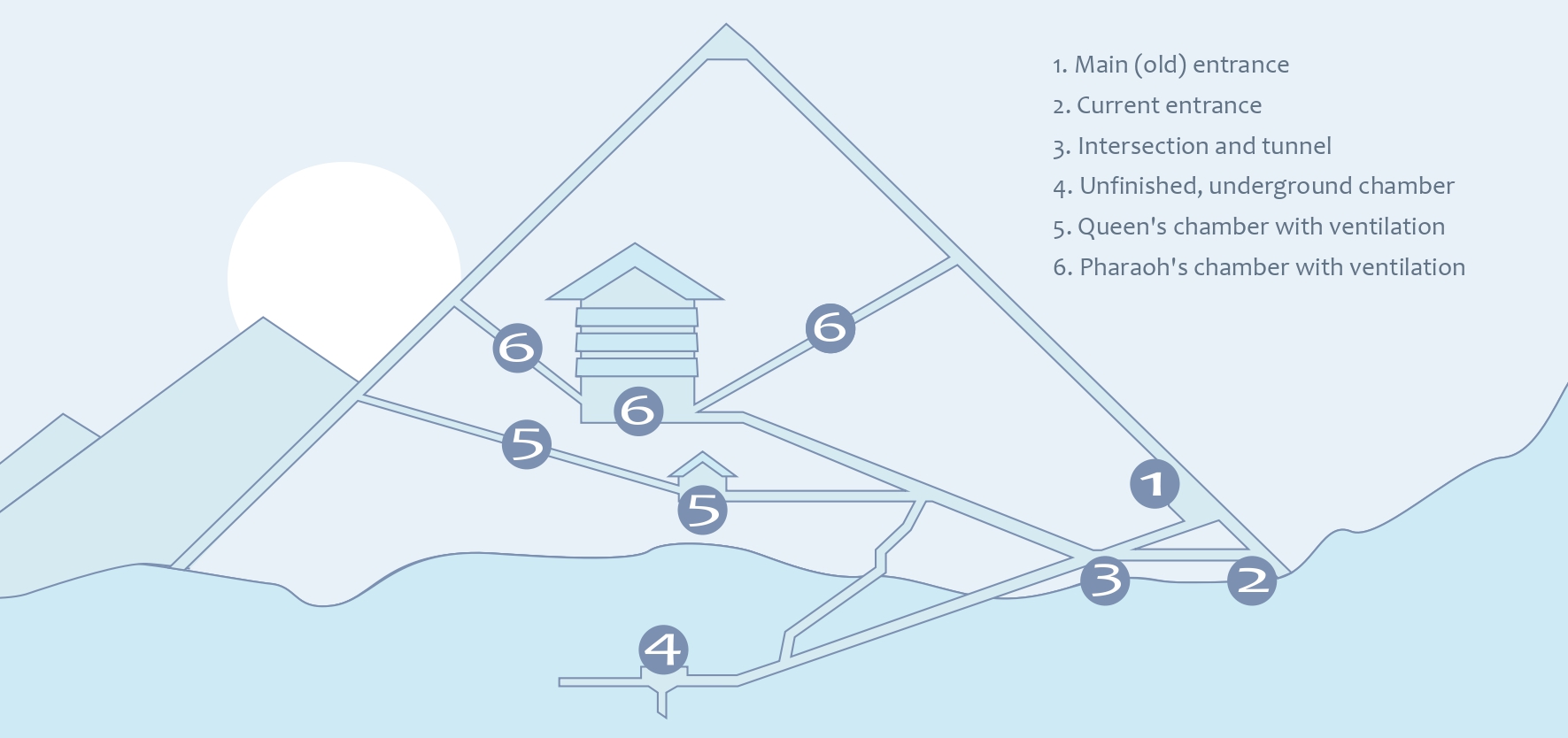
The history of ventilation dates back to ancient times. The first ventilation systems appeared in ancient Egypt. They were used to ventilate temples, palaces and tombs. A vivid example is the pyramid of Cheops. During its construction the builders of that time envisioned a developed ventilation system in which the location of air ducts was clearly thought out and designed.
In the 1st century BC the ancient Romans, laying centralized heating in public baths and houses of rich nobles, connected air ducts to the furnaces which were laid under the floor. In such a ventilation system special stone channels for smoke, which departed from the main heating source, were thought out and implemented. Accordingly, the smoke passed under the floor and was brought out. Such an air exchange mechanism became a real technological breakthrough at that time because it was possible not only to heat the house, but also to avoid smoke entering the room and to leave it fresh. This was the main task of ventilation at that time – to make the house as clean and livable as possible.
After that, progress in the field of indoor air exchange remained at the same level for a long period of time.
In medieval palaces and castles a brazier became the main heating device (medieval heating radiator) which had the appearance of a portable stove covered with a cap.
It consisted directly of the hearth itself, a chimney and a covering that prevented the wind from disrupting the draft. In order to heat the room to a comfortable temperature in winter, it was necessary to place not one but several fireplaces in the room. And ventilation with the help of channels in the lower part of the walls caused strong drafts.It consisted directly of the hearth itse
This became an important impetus for the realization of the next discovery of medieval architects – ensuring the inflow of air from above which was carried out with the help of pipes built into each other. At the same time, other types of ventilation systems were also used. The exhaust pipe was lowered in them into special wells designed for collecting human waste products.
Such ventilation systems have remained unchanged for many centuries. However, based on their own experience and experiments on animal’s scientists have proven that life-threatening gas appears in a room with no ventilation. And the doctors concluded that harmful bacteria and microorganisms multiply faster in such housing and a specific gas is formed. A century later, scientist Antoine Laurent Lavoisier named the gas «carbon dioxide» and wrote down its formula for the first time.
In the early nineteenth century, engineer Thomas Tredgold created air exchange standards based on his own calculations. It was his norm that became the first in the air quality assessment system. In his opinion, the optimal volume of air per person, which would ensure normal life activity, was 7.2 m3.
However, with the development of the construction industry, the natural ventilation system no longer met the need for indoor air. This is how mechanical ventilation arose the principle of which was to create a difference in air pressure with the help of a fan or an ejector. This method turned out to be the most effective, as it gave the residents of the house the opportunity to clean the air from dust, bring it to a certain temperature and humidity it. In 1866 in the USA, the company B.F. Sturtevant Co. installed the first ventilator in the Capitol. And already in 1895, the first work of John Shaw Billings «Principles of Ventilation and Heating and Their Practical Application», was published in which the specifications and standards of ventilation for large public buildings were described.
In 1902, the American Willis Haviland Carrier creates the world’s first air conditioning system for a New York printing house. The invention controlled the temperature and humidity of the air.

Starting from 1950, mechanical supply and exhaust ventilation systems appeared in houses.
However, the oil crisis of 1974 made significant adjustments to the development of the mechanical ventilation system. In order to increase thermal resistance and reduce air leakage from buildings, architects began to massively insulate buildings. Therefore, those built between 1974 and 1988 were poorly ventilated. And the people who were inside suffered from headaches, dizziness, drowsiness, fatigue, eye irritation and frequent respiratory diseases.
In 1998, the «sick building» syndrome was outlined. This led to the fact that already in the 90s of the late 20th century most buildings were equipped with mechanical ventilation with energy recovery. Such systems used fans, ducts, silencers, electric motors, air heaters, dust collectors and modern equipment control principles.
One of the best solutions for organizing modern ventilation is Pranarecuperators. Progressive patented technology based on a copper heat exchanger ensures preservation of up to 98% of heat and coolness in the room and ensures high-quality air exchange 24 hours a day.
