
 +38 044 383-03-46
 Cost calculation
A frequently asked question by users is, «Is copper heat exchanger recuperator harmful to human health?». In this article, we will break down how copper affects our body and in many ways its benefits.
From chemistry class, most people know the Latin name for this pink-golden metal, Cuprum. Copper is one of the first metals that man was able to master and use in his life. Archaeologists know of ancient (BC) finds of copper utensils, weapons and jewelry. Later people understood copper bactericidal properties and its application had sanitary character: spoons, door handles and water pipes were made of this metal.

Physiological role of copper
With everyday use of copper everything is more or less clear. But how are things with copper in the human body? In the vast majority of cases, we consume copper with food. Fruits and vegetables are rich in copper (up to 230 mg). But sea foods, spinach, corn, carrots, apples, nettles, potatoes, and cocoa beans are the most rich in copper. Scientists have determined the optimal amount of copper needed to stay healthy is 2 to 3 mg per day. As with other micronutrients, copper deficiency in humans has serious consequences (a deficiency develops when less than 1 mg of copper per day is taken. Nevertheless, copper should be eaten in doses, because an excess of it is just as damaging. When more than 200 mg of copper per day is consumed, a toxic syndrome develops.
Copper penetrates all human organs and tissues. Its maximum concentration is usually observed in the kidneys, liver, brain and blood. The regulation of copper in the body is responsible for the special protein ceruloplasmin, which is synthesized in the liver.
Copper in human metabolism
Consider the entire cycle of copper activity in our body. When taken into the body with food, most copper is adsorbed in the gastrointestinal tract (up to 95%). Once in the blood, copper binds to several groups of substances: amino acids (histidine, threonine, glutamine), serum albumin, transcuprine, ceruloplasmin (these proteins transport copper through the body).
In the human body, copper has a wide range of effects:
- is part of vitamins;
- is a part of hormones;
- is part of the nerve membrane;
- an ingredient in enzymes, respiratory pigments;
- supports the structure of cartilage, tendons and blood vessels;
- provides antioxidant protection of the body;
- boosts immunity;
- enhances the effect of antibiotics;
- alleviates the appearance of autoimmune diseases;
- Supports anti-inflammatory properties;
- Contributes to good absorption of iron.
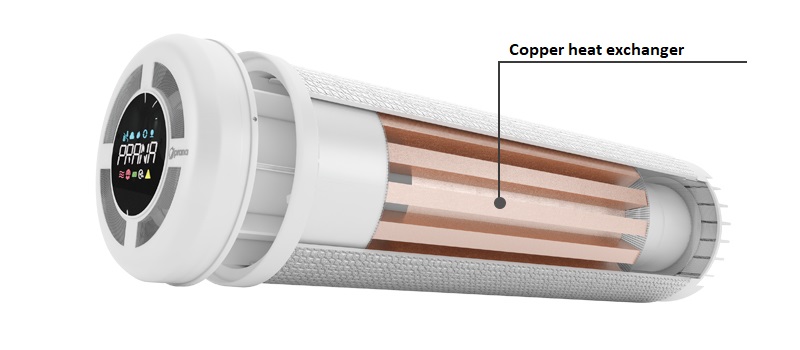
Copper heat exchanger and human health
In PRANA recuperators the leading role in energy saving is played by the copper heat exchanger located inside the working module. During the operation it is not subject to destruction (its particles do not move in the tidal air flow). Therefore, when the recuperator works, there is no threat to humans. Copper has been familiar to mankind for many centuries and is well studied, so even physical contact with the copper surface (touch) does not affect health.