+38 044 383-03-46
 Cost calculation
Buildings are no longer evaluated solely by their energy consumption. The new international WELL standard measures something more complex — the quality of the environment for the people who live and work in it. And air is the first and most important criterion of this standard.
Where WELL Came From — The Story Behind the Standard
In the early 2010s, the construction industry was dominated by a single approach to building design: reducing energy consumption and lowering CO₂ emissions.
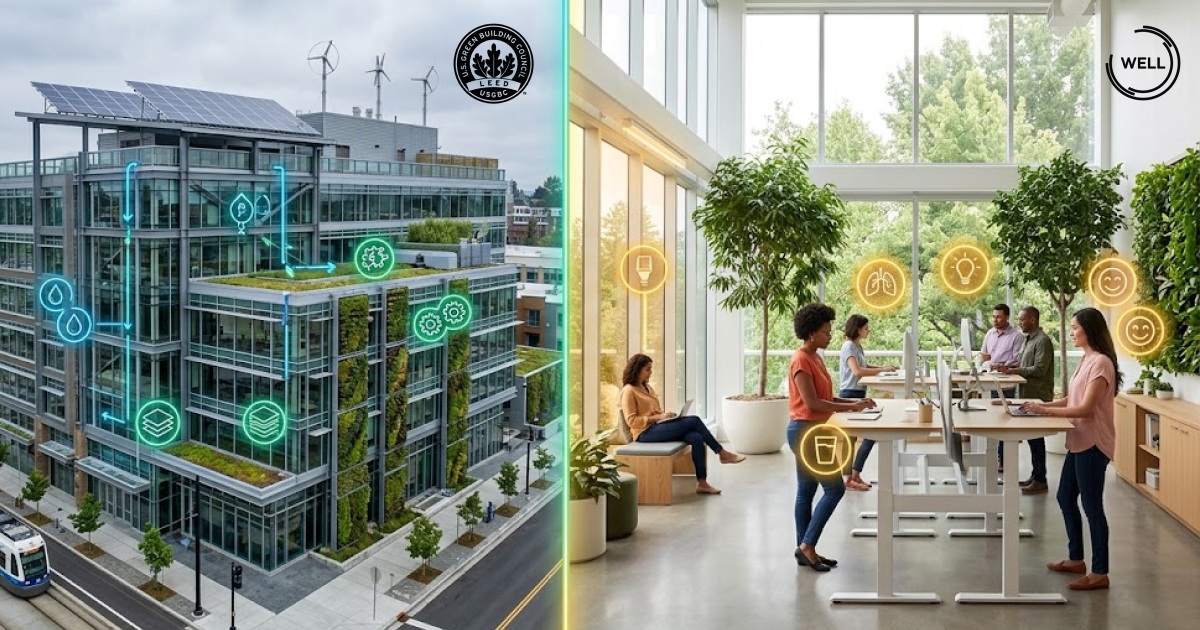
At that time, standards such as LEED (Leadership in Energy and Environmental Design), BREEAM (Building Research Establishment Environmental Assessment Method), and DGNB (German Sustainable Building Council) were rapidly gaining traction. These systems evaluated buildings primarily as technical systems — in terms of resources, materials, and environmental impact. Yet one crucial question remained largely overlooked: how do people actually feel inside these buildings?
LEED, BREEAM, and DGNB all evaluated buildings as technical systems. But no one was asking: how do people actually feel inside them?
At the same time, American entrepreneur and investor Paul Scialla set out to close this gap. In 2013, as part of the Clinton Global Initiative, his company Delos founded the International WELL Building Institute — a non-profit organization built around a simple idea: buildings should actively improve people’s health, not merely avoid harming it.
In 2014, following a two-year pilot program and an independent scientific review, the first public version — WELL v1 — was released. The standard was immediately certified by Green Business Certification Inc., the same organization that administers LEED. This gave the market confidence in WELL from day one.